


Why Some Homes Feel Bigger Than They Actually Are


Have you ever walked into a home and been surprised by how spacious it feels, only to discover the square footage isn't all that impressive?
On the flip side, you've probably seen larger homes that somehow feel cramped, cluttered, or difficult to navigate.
The truth is, making a home feel spacious has less to do with square footage and more to do with how the space is designed, arranged, and experienced. Here are a few of the biggest factors that influence how large a home feels.
1. Furniture Scale Matters More Than You Think
One of the most common mistakes homeowners make is choosing furniture that's either too large or too small for the room. Oversized sectionals, bulky recliners, or furniture that blocks pathways can quickly make a room feel crowded. On the other hand, furniture that is too small can make a space feel disconnected and awkward.
The goal is balance. Well-scaled furniture allows a room to function comfortably while still leaving breathing room around it. A room doesn't need less furniture, it just needs the right furniture.
2. Clear Sight-Lines Create a Sense of Openness
When you enter a room, your eye naturally wants to travel through the space.
Large furniture pieces, cluttered surfaces, or awkward layouts can interrupt that flow and make a room feel smaller than it is.
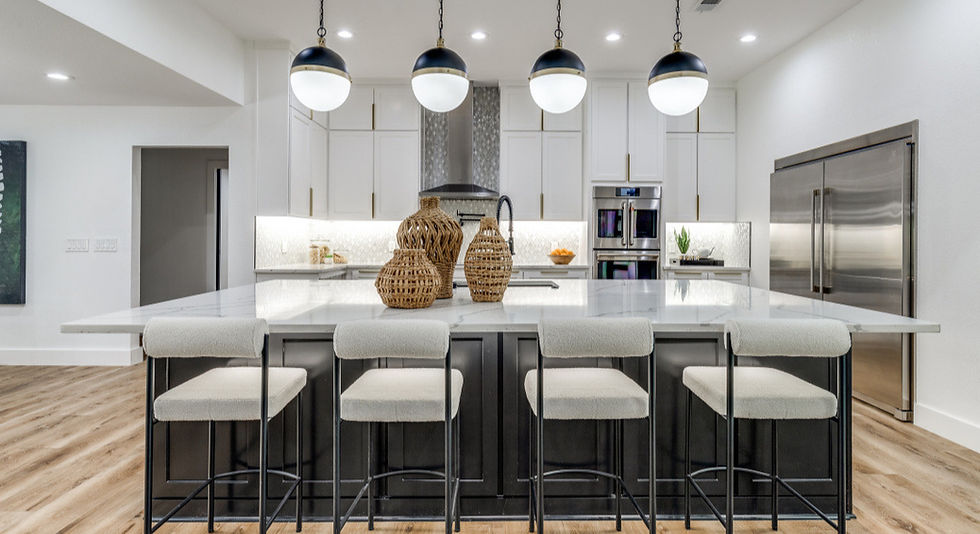
One of the easiest ways to make a home feel larger is to create clear sight-lines. This might mean repositioning furniture, removing unnecessary pieces, or simplifying decor.
The easier it is for your eye to move through a room, the more open it will feel.
3. Not Every Corner Needs Something
Many homeowners feel pressure to fill every wall, shelf, and corner. In reality, some of the most beautiful spaces intentionally leave areas empty.
Designers often refer to this as "negative space"—the visual breathing room that helps a space feel calm and balanced. Empty doesn't mean unfinished, it means intentional.
Sometimes the quickest way to improve a room is by removing something rather than adding more.
4. Light Changes Everything
Natural light is one of the most powerful tools in design. Rooms with abundant natural light often feel larger, brighter, and more inviting. Even if a room lacks large windows, thoughtful lighting can have a similar effect.
Layering lighting through lamps, sconces, and accent lighting helps create depth and dimension throughout a space. A well-lit room almost always feels more expansive than a dark one.
5. A Defined Purpose Makes a Room Feel Larger
This one surprises people. When a room serves too many purposes, it can start to feel chaotic and crowded.
A guest room that doubles as an office, workout space, storage room, and hobby room often feels smaller because there's no clear visual focus. Defining how a room is meant to function helps create order and clarity.
When buyers (and homeowners) can immediately understand a room's purpose, the space feels more usable and more spacious.
The Bottom Line
Making a home feel bigger isn't always about knocking down walls or adding square footage.
More often, it's about thoughtful choices: selecting the right furniture, creating visual breathing room, maximizing light, and allowing each space to serve a clear purpose.
At Bluebird, we see it all the time. Some of the most inviting homes aren't the largest ones, they're simply the homes that have been designed with intention. When a home feels open, functional, and welcoming, it doesn't just look bigger. It feels better.



Comments